● Course DEP‑2026 · Advanced Data Engineering Track
Databricks Certified Data Engineer Professional
A free, self-paced advanced course built from the 2026 exam blueprint — Multiplex Bronze ingestion, SCD Type 2 with APPLY CHANGES INTO, Liquid Clustering & Predictive Optimization, production CI/CD with Databricks Asset Bundles, SLA-driven monitoring, and Unity Catalog security & governance at scale. Designed to build on the Associate certification and take you into senior, production-owning engineering territory.
A senior-level continuation of the Associate track
This course mirrors the official Databricks Certified Data Engineer Professional exam blueprint, focused on production ownership: reliability, cost, latency SLAs, and governance at scale.
Subject
Advanced Production Data Engineering
Prerequisite
Associate certification strongly recommended
Registration Fee
USD 200 + tax
Delivery
Online or Test Center
Test Aides
None allowed
Recertification
Every 2 years
⚙ WHAT PROFESSIONAL ADDS ON TOP OF ASSOCIATE
The Professional exam assumes you already know the Associate basics, then tests whether you can operate them at production scale under real SLAs:
Build a single unified Bronze table that ingests multiple mixed-schema sources, avoiding the overhead of managing hundreds of individual pipelines.
🕰️
Automate SCD Type 2 History
Use APPLY CHANGES INTO with sequence_by keys to handle out-of-order CDC events and maintain full historical record versioning.
⚡
Optimize Cost & Performance
Diagnose data skew, shuffle spill, and small-file problems using Spark UI & Ganglia UI, then remediate with Liquid Clustering and AQE.
🚀
Own Production CI/CD
Package pipelines as Databricks Asset Bundles, understand REST API 2.0 idempotency, and promote code across Dev/Test/Prod reliably.
📡
Monitor Against SLAs
Design alerting logic, interpret multi-task job statuses, and use Repair & Rerun to recover production workflows with zero data loss.
🔐
Govern & Secure at Scale
Implement dynamic views, ABAC policies, secret scopes, and automated lineage across the full Medallion architecture.
Exam Outline · Weighted by Domain
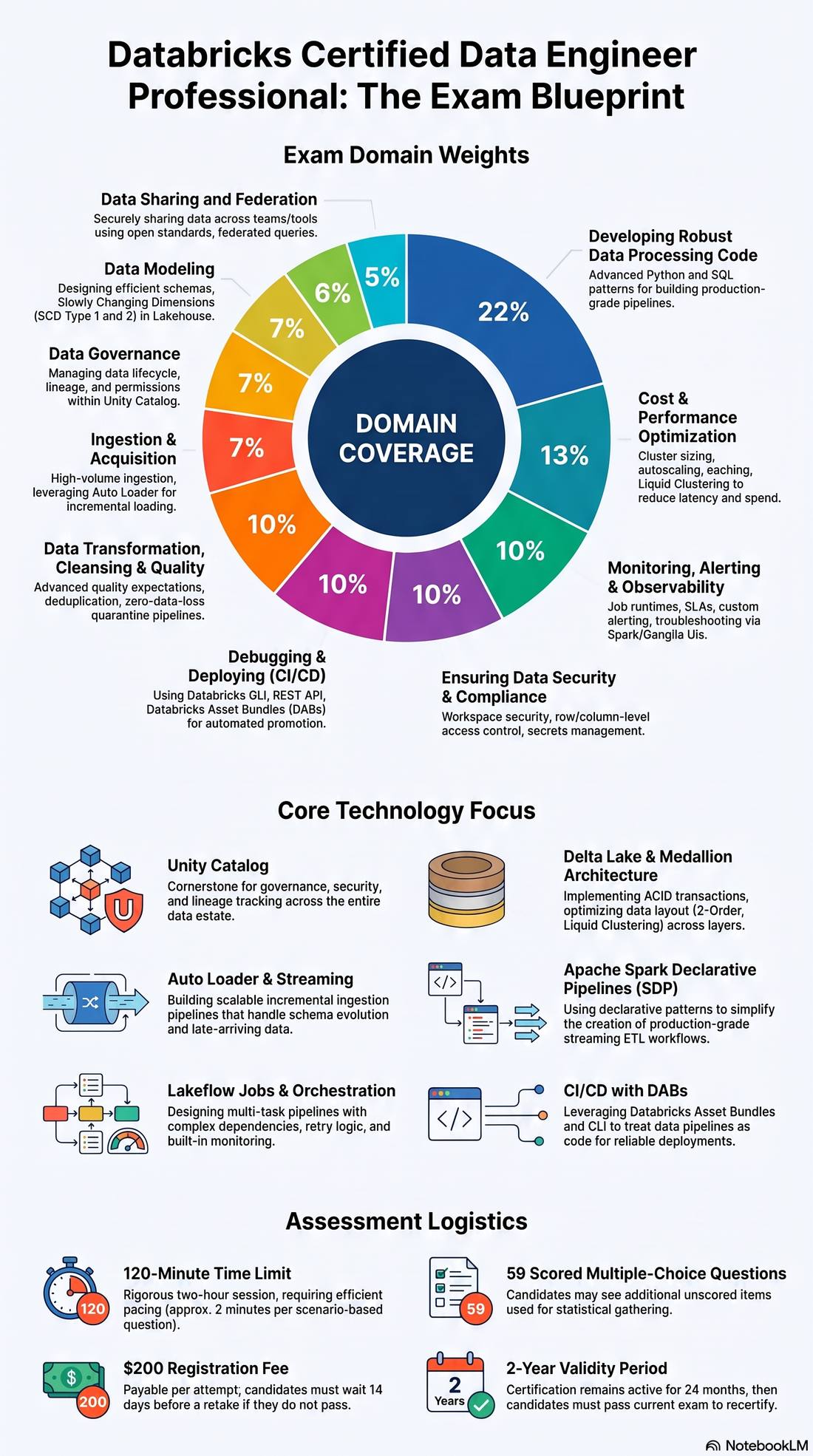
10 domains, 59 scored questions, 120 minutes
Developing Robust Data Processing Code alone accounts for nearly a quarter of the exam — study that module hardest. Cost & Performance Optimization is the second-largest block.
Ten modules in a progressive build order — ingest, transform, model, code, deploy, monitor, optimize, secure, govern, share — each ending with an exam tip pulled from the source material.
Module 1Ingestion & Acquisition7%+
At the Professional level, ingestion moves beyond a single Auto Loader stream into architecting for many concurrent, mixed-schema sources without multiplying operational overhead.
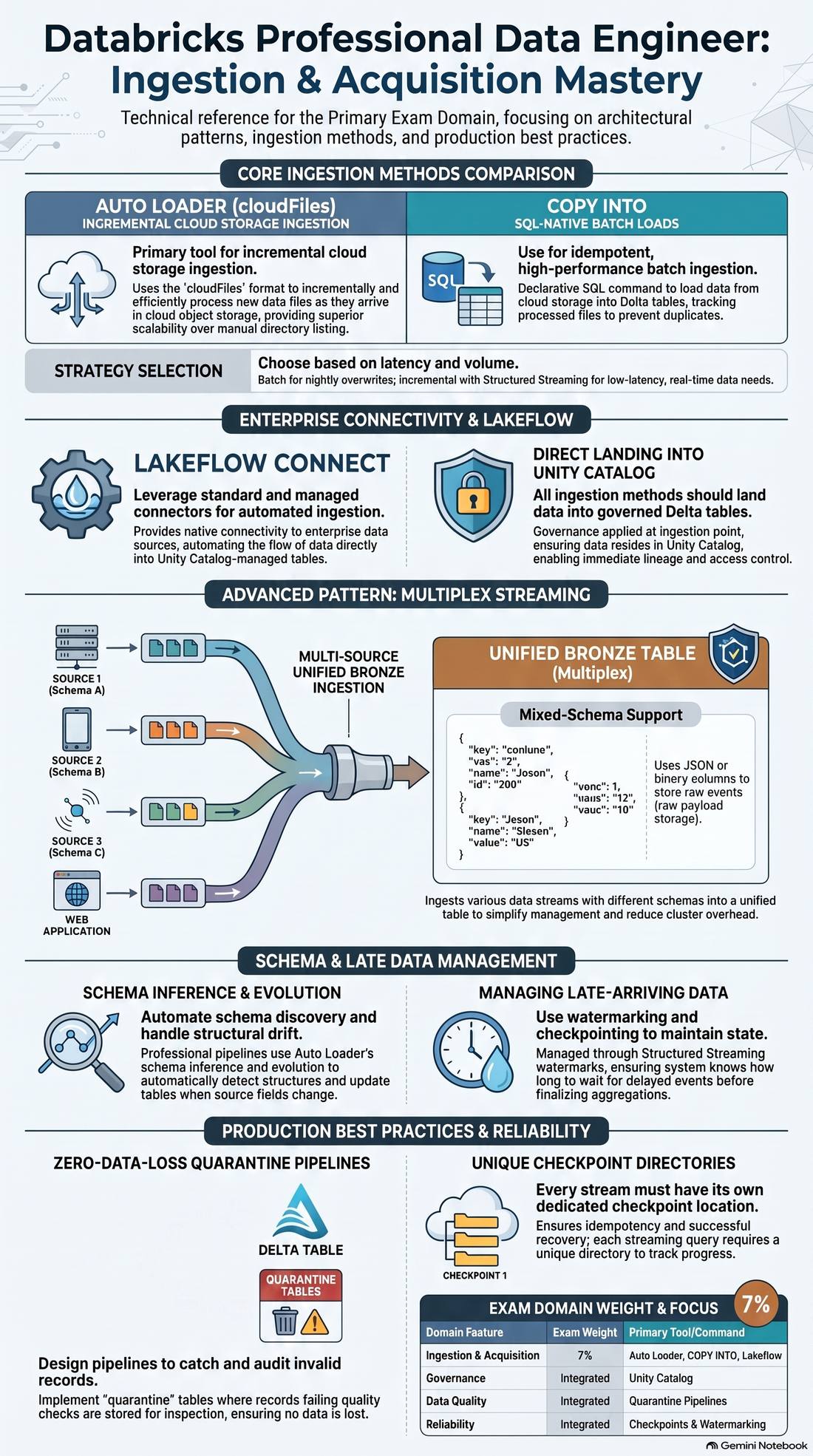
Fig. 1.1 — Auto Loader vs. COPY INTO selection, the Multiplex Streaming pattern, and production reliability practices.
Core ingestion method comparison
Auto Loader (cloudFiles)Primary tool for incremental cloud storage ingestion. Efficiently processes new files as they arrive, with superior scalability over manual directory listing.
COPY INTODeclarative SQL for idempotent, high-performance batch ingestion — tracks processed files to prevent duplicates.
Strategy selection: choose based on latency and volume — batch for nightly overwrites, incremental with Structured Streaming for low-latency, real-time needs.
The Multiplex Bronze pattern
A single "multiplex" Bronze table ingests multiple data streams with different schemas into one unified table, using JSON or binary columns for raw payload storage. This reduces cluster overhead versus managing hundreds of individual stream-to-table pipelines, and simplifies governance since one ingestion point lands data into Unity Catalog before routing to specific Silver tables.
Schema & late data management
Schema inference and evolution: Auto Loader automatically detects structural drift and updates tables as source fields change.
Late-arriving data: managed through Structured Streaming watermarks, which tell the system how long to wait for delayed events before finalizing aggregations.
Production reliability practices
Zero-data-loss quarantine tablesUnique checkpoint directory per streamDirect landing into Unity Catalog
Exam tip
Every stream needs its own dedicated checkpoint location — reusing one across streams causes state-metadata conflicts and breaks recovery/idempotency. This exact scenario appears repeatedly across the question bank.
The Medallion flow at Professional level adds explicit quality-enforcement policies and a formal quarantine pattern rather than just "clean the data."
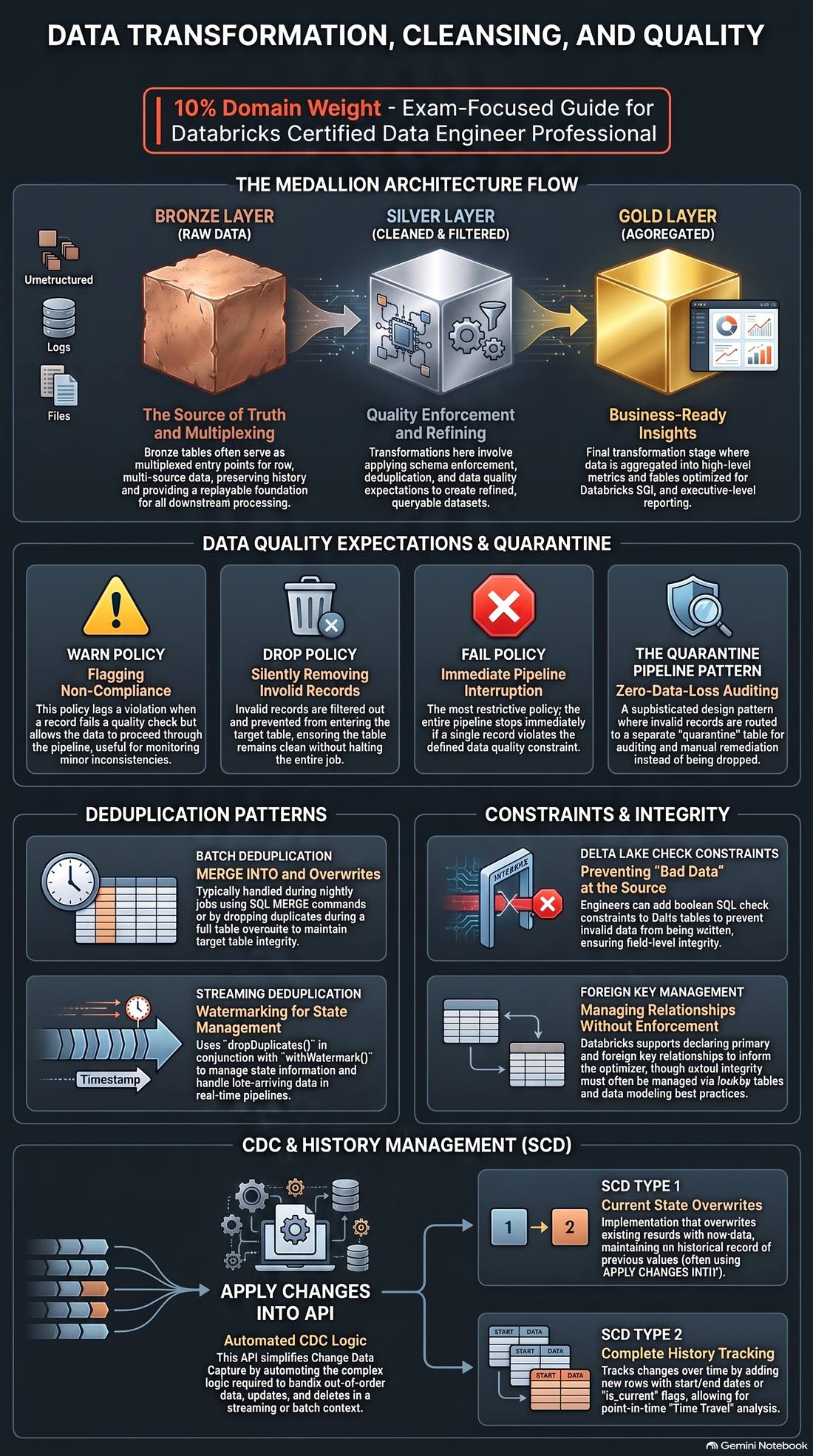
Fig. 2.1 — Bronze/Silver/Gold flow, Warn/Drop/Fail expectation policies, the quarantine pattern, and deduplication strategies.
Data quality expectations & the quarantine pattern
WARN — flag violation, let record passDROP — silently remove invalid recordFAIL — halt the pipeline immediately
The Quarantine Pipeline Pattern: a more sophisticated design than DROP — invalid records are routed to a separate quarantine table for auditing and manual remediation instead of being discarded, achieving zero-data-loss compliance.
CONSTRAINT valid_id EXPECT (user_id IS NOT NULL) ON VIOLATION DROP ROW,
CONSTRAINT valid_time EXPECT (event_timestamp <= current_timestamp()) ON VIOLATION QUARANTINE
Deduplication patterns
Batch deduplicationHandled during nightly jobs using SQL MERGE commands or full table overwrites to maintain target table integrity.
Streaming deduplicationUses dropDuplicates() with withWatermark() to manage state and handle late-arriving data in real-time pipelines.
Constraints & integrity
Delta Lake supports boolean SQL CHECK constraints to prevent invalid data at the source. Foreign keys can be declared to inform the optimizer, but Databricks does not natively enforce them — actual referential integrity must be managed via lookup tables and modeling discipline.
Exam tip
If a scenario asks for "zero data loss" alongside quality enforcement, the answer is the quarantine pattern — not DROP, which silently discards records.
Practice Questions — Module Quiz
Click an option to reveal whether it's correct.
Module 3Advanced Data Modeling7%+
Modeling at this level covers advanced SCD implementation, referential integrity workarounds, and the normalized-vs-denormalized trade-off inside a Lakehouse.
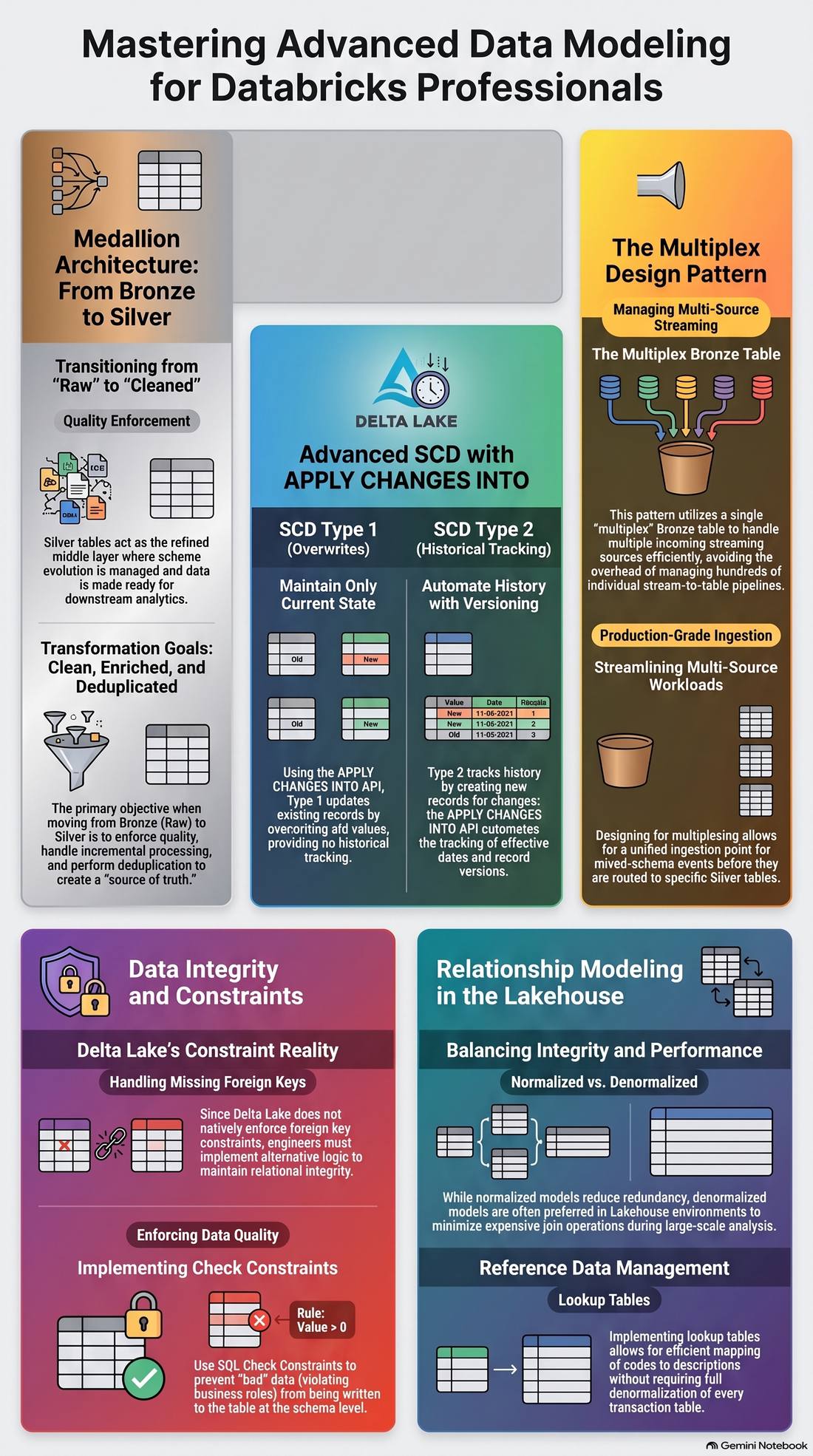
Fig. 3.1 — Bronze-to-Silver transition, SCD Type 1 vs. Type 2 with APPLY CHANGES INTO, Multiplex Bronze pattern, and normalized vs. denormalized trade-offs.
SCD Type 1 vs. Type 2 with APPLY CHANGES INTO
SCD Type 1 — OverwriteMaintains only current state. APPLY CHANGES INTO updates existing records by overwriting old values — no historical tracking.
SCD Type 2 — Historical TrackingAutomates history by creating new rows for changes, tracking effective dates and record versions (__start_at, __end_at, __is_current).
Relationship modeling in the Lakehouse
Normalized vs. denormalized: normalized models reduce redundancy, but denormalized models are often preferred in Lakehouse environments to minimize expensive join operations during large-scale analysis. Use lookup tables for efficient code-to-description mapping without fully denormalizing every transaction table.
Handling missing foreign keys
Since Delta Lake does not natively enforce foreign key constraints, engineers must implement alternative logic (lookup validation, quality expectations) to maintain relational integrity — this is a frequent "gotcha" on the exam.
Practice Questions — Module Quiz
Click an option to reveal whether it's correct.
Module 4Developing Robust Data Processing Code22%+
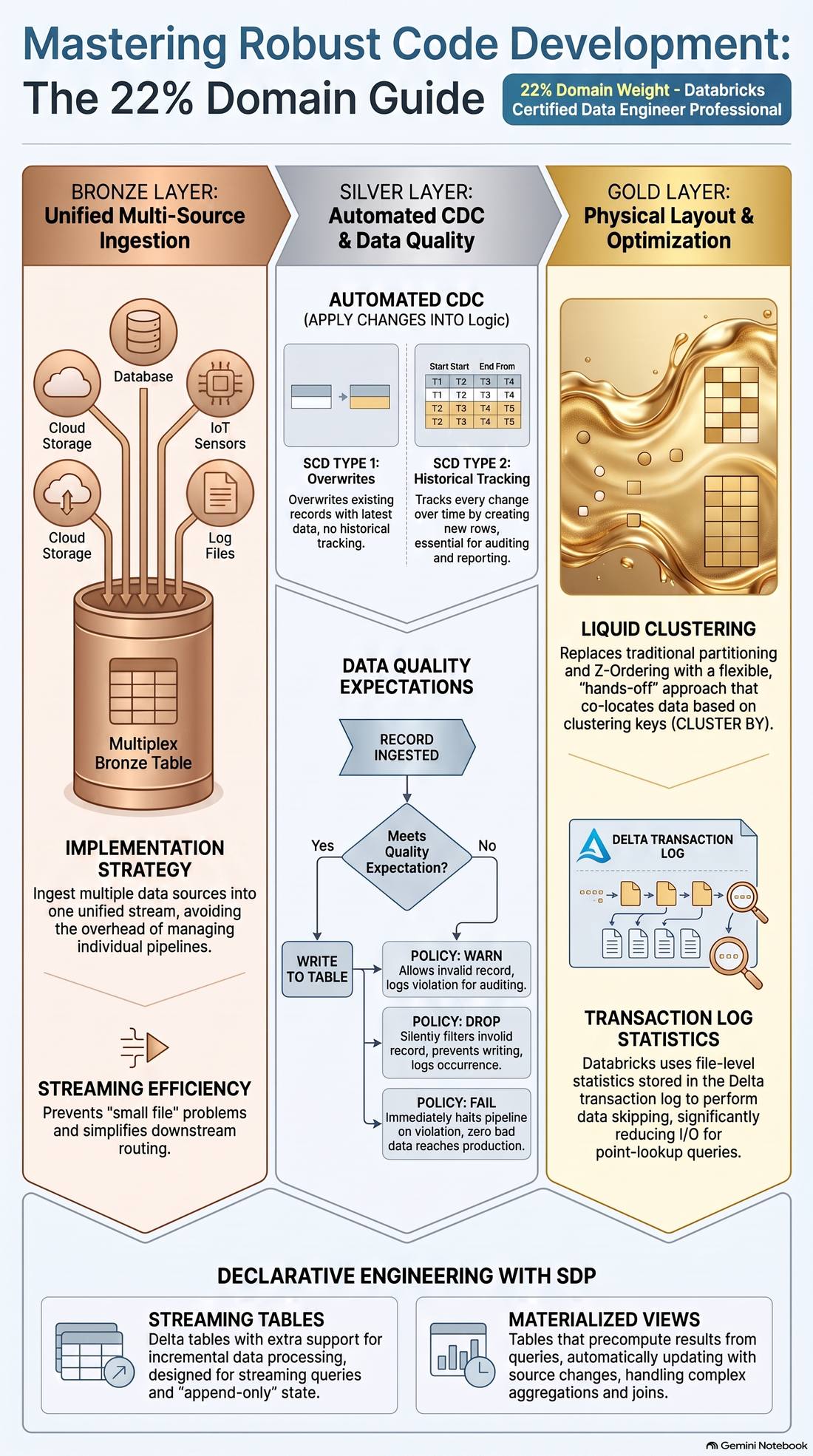
The single largest domain — production-grade code across the full Bronze → Silver → Gold flow, using declarative Spark Declarative Pipelines patterns.
Ingest Cloud Storage, Database, IoT Sensor, and Log File sources into one Multiplex Bronze Table — avoiding the overhead of managing individual pipelines per source, and preventing the "small file" problem by matching trigger intervals to data volume.
Silver: automated CDC & data quality
Every ingested record runs through a quality gate: Meets Quality Expectation? → Yes writes to table; No applies the configured policy (Warn / Drop / Fail). SCD logic (Type 1 overwrite vs. Type 2 historical tracking) is handled automatically via APPLY CHANGES INTO.
Gold: physical layout & optimization
Liquid Clustering replaces traditional partitioning and Z-Ordering with a flexible, hands-off approach that co-locates data based on clustering keys (CLUSTER BY). Databricks uses file-level statistics in the Delta transaction log to perform data skipping, significantly reducing I/O for point-lookup queries.
Declarative engineering with SDP
Streaming TablesDelta tables with extra support for incremental data processing, designed for streaming queries and "append-only" state.
Materialized ViewsPrecompute query results, automatically updating with source changes; handle complex aggregations and joins.
Exam tip
If a question emphasizes "minimizing operational overhead of managing hundreds of individual streams," the answer is virtually always the Multiplex Bronze pattern.
Practice Questions — Module Quiz
Click an option to reveal whether it's correct.
Module 5Debugging & Deploying (CI/CD)10%+
The domain shifts from "how to build" to "how to operate at scale" — programmatic job management and declarative deployment.
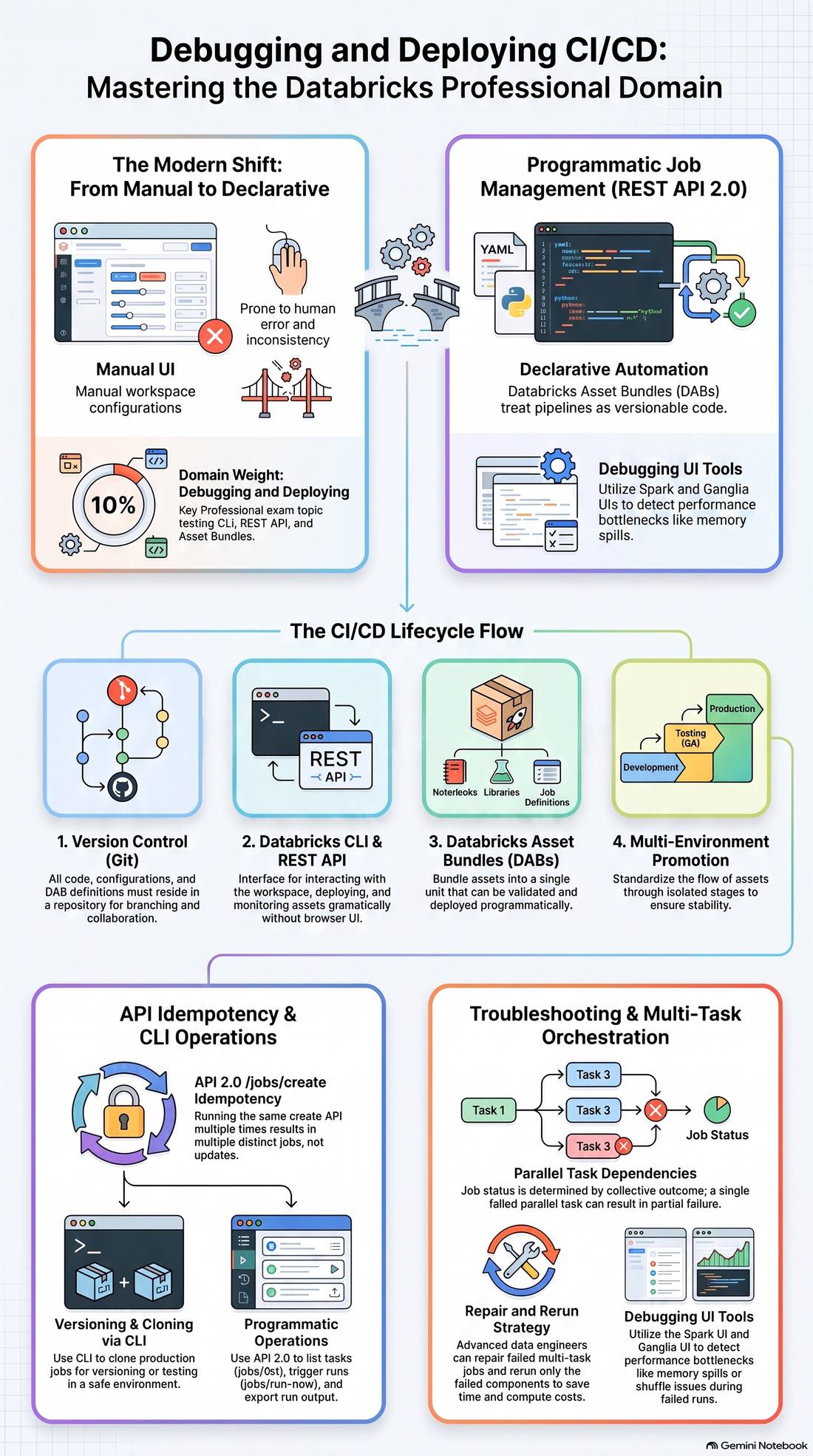
Fig. 5.1 — Manual UI vs. Declarative Automation, the 4-phase CI/CD lifecycle, API idempotency, and multi-task troubleshooting.
REST API 2.0 idempotency — a critical gotcha
Running 2.0/jobs/create multiple times with an identical JSON payload does not update anything — it creates multiple distinct jobs, each with a unique Job ID. This lacks the state-awareness of declarative tools.
Unlike the raw REST API, databricks bundle deploy is idempotent — it updates existing state rather than duplicating resources. Variables like ${bundle.target} parameterize database names and cluster sizes across Dev/Test/Prod.
Troubleshooting & multi-task orchestration
Job status is determined by the collective outcome of the DAG. If a root task and one parallel branch succeed but another parallel branch fails, the job run is reported as Partially Completed — not Failed, not Succeeded.
Repair and Rerun restarts only the failed task and its downstream dependents, preserving work already completed — never re-running the entire workflow from scratch.
Exam tip
"Root task + Task B succeed, Task C fails" → the terminal job status is Partially Completed. Memorize this exact phrase; it appears across multiple question banks.
Practice Questions — Module Quiz
Click an option to reveal whether it's correct.
Module 6Monitoring, Alerting & Observability10%+
Production stability requires synthesizing metrics across Spark UI, Ganglia UI, and Unity Catalog lineage to maintain strict SLAs.
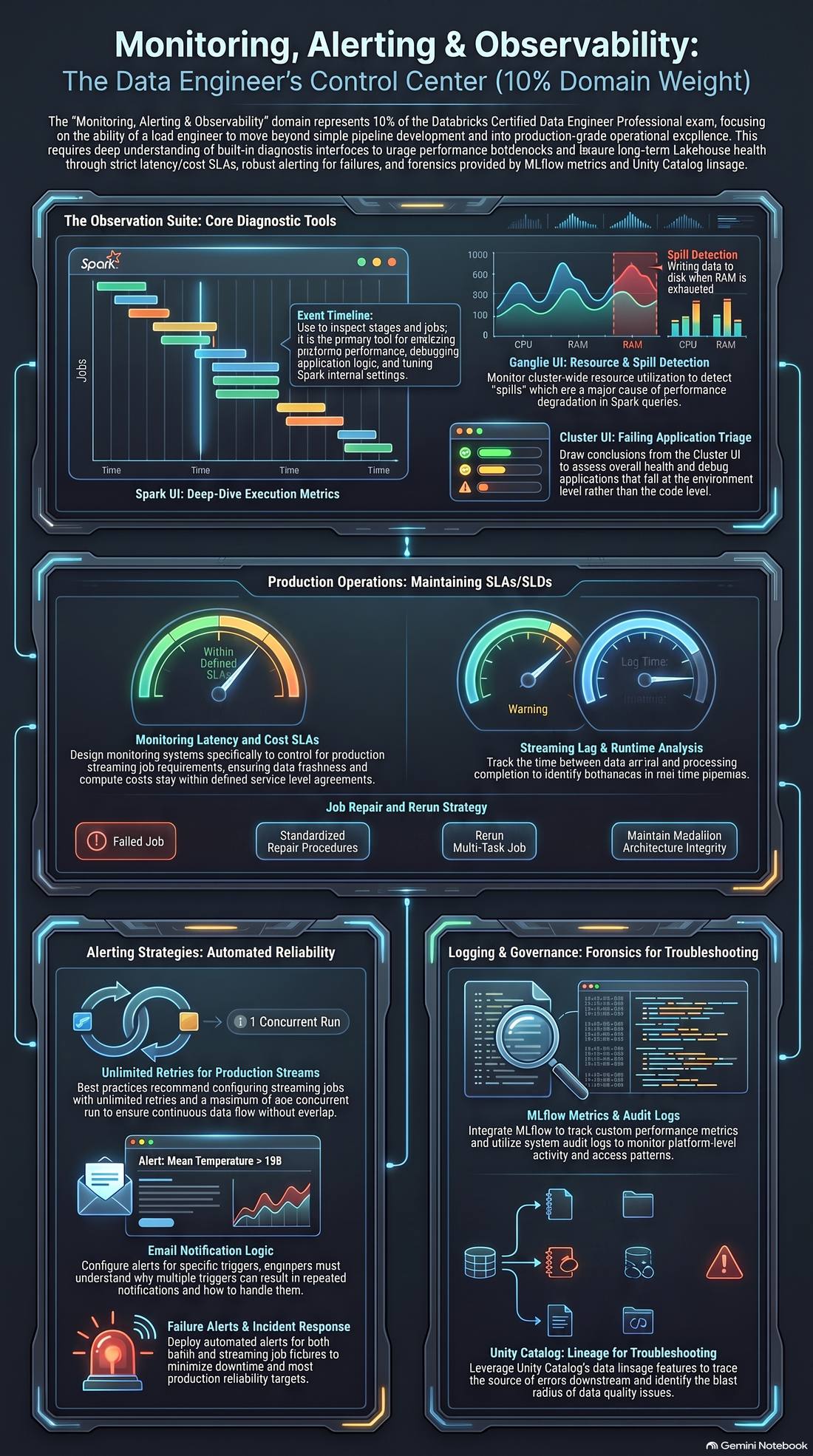
Fig. 6.1 — The observation suite (Spark UI, Ganglia UI, Cluster UI), SLA gauges, alerting strategies, and forensics via MLflow & Unity Catalog lineage.
The observation suite
Spark UIDeep-dive execution metrics — inspect stages/jobs, debug application logic, tune internal Spark settings via the event timeline.
Ganglia UICluster-wide resource utilization — detect memory/disk "spill" via a crossover signature: memory maxed out + simultaneous disk I/O spike.
Alerting strategies
Production streaming jobs should be configured with unlimited retries capped at one concurrent run to prevent state-file corruption from overlapping executions. If an engineer receives multiple notifications for one threshold breach, the likely cause is multiple triggers configured for the same alert — not a data issue.
Logging & governance forensics
Integrate MLflow to track custom performance metrics, and leverage Unity Catalog's data lineage to trace the source of errors downstream and identify the blast radius of a data quality issue.
Exam tip
Setting Maximum Concurrent Runs to 1 on a streaming job cluster exists specifically to prevent conflicting access to a shared checkpoint directory — not for cost control.
Practice Questions — Module Quiz
Click an option to reveal whether it's correct.
Module 7Cost & Performance Optimization13%+
The second-largest domain — balancing compute cost against latency SLAs through modern, hands-off optimization features.
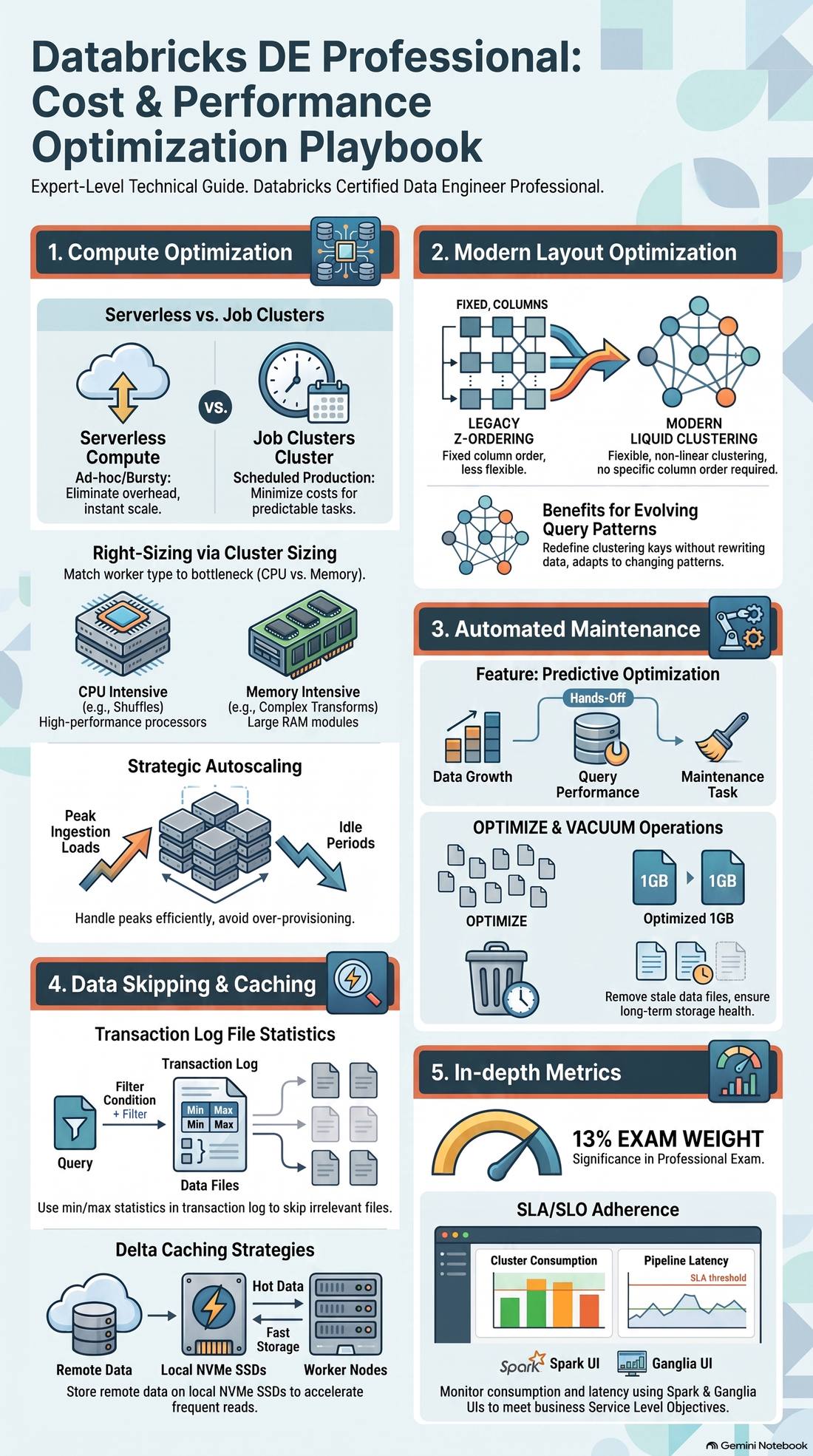
Fig. 7.1 — Serverless vs. job clusters, legacy Z-Ordering vs. Liquid Clustering, Predictive Optimization, and Delta caching strategies.
Compute optimization
Serverless ComputeBest for ad-hoc/bursty workloads — eliminates overhead, scales instantly.
Job ClustersBest for scheduled production workloads — minimizes cost for predictable, isolated tasks.
Right-sizing: match worker type to the actual bottleneck — high-performance processors for CPU-intensive shuffles, large RAM modules for memory-intensive complex transforms.
Modern layout optimization
Liquid Clustering replaces legacy Z-Ordering's fixed column order with flexible, non-linear clustering — clustering keys can be redefined as query patterns evolve, without rewriting the underlying data.
Automated maintenance: Predictive Optimization
A hands-off feature that observes data growth and query performance, then automatically determines when to run OPTIMIZE and VACUUM — eliminating manually scheduled maintenance jobs entirely.
Data skipping & caching
Delta's transaction log stores min/max column statistics per file, enabling file skipping so irrelevant files are never read. Delta caching stores frequently accessed remote data on local NVMe SSDs to accelerate repeat reads.
Exam tip
The default OPTIMIZE target file size is 1GB — this exact figure is tested repeatedly across multiple question banks in this domain.
Practice Questions — Module Quiz
Click an option to reveal whether it's correct.
Module 8Ensuring Data Security & Compliance10%+
Moves beyond basic permissions into dynamic, attribute-driven governance and secure secrets handling for production credentials.
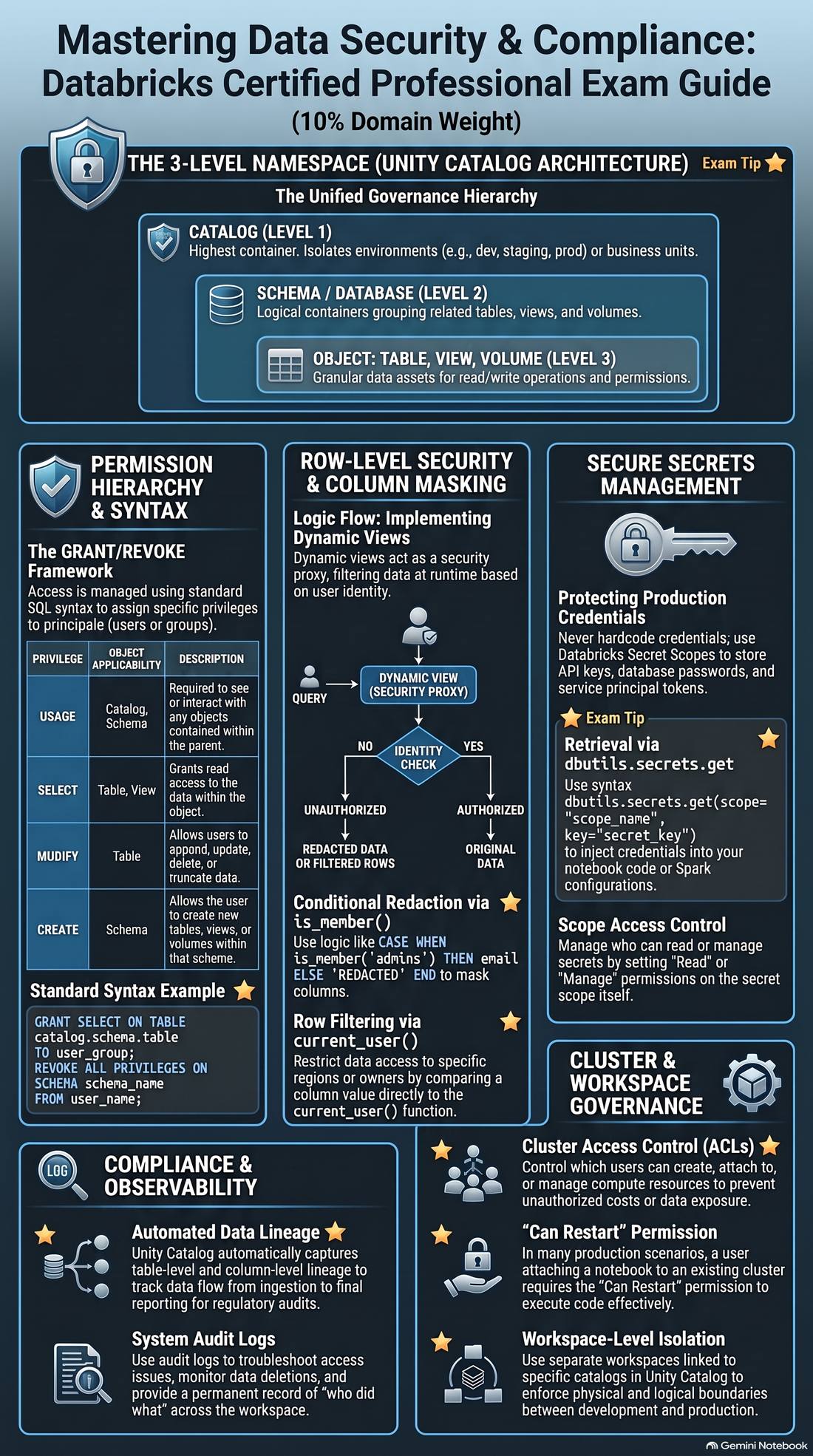
Fig. 8.1 — The 3-level namespace, GRANT/REVOKE syntax, dynamic-view masking logic, secret scope retrieval, and cluster/workspace governance.
Dynamic views for masking & row-level security
CREATE VIEW secure_view AS
SELECT id,
CASE WHEN is_member('audit_team') THEN email
ELSE 'REDACTED' END AS email
FROM users;
A query flows into the dynamic view (security proxy) → identity check via is_member() or current_user() → authorized users see original data, unauthorized users see redacted/filtered rows.
Secrets management
Never hardcode credentials. Retrieve them with dbutils.secrets.get(scope="scope_name", key="secret_key"). Scope-level permissions are either Read (use the secret in a job) or Manage (administer the scope itself) — a service principal running a job only needs Read.
Permission hierarchy
Privilege
Applies to
Grants
USAGE
Catalog, Schema
Required to see/interact with any object inside the parent
SELECT
Table, View
Read access to data
MODIFY
Table
Append, update, delete, truncate
CREATE
Schema
Create new tables/views/volumes
Exam tip
Granted SELECT on a table but still can't query it? You're missing USAGE on the parent catalog and schema — access requires "entry" permission on every container above the object.
Practice Questions — Module Quiz
Click an option to reveal whether it's correct.
Module 9Data Governance7%+
Unity Catalog as the single source of truth for permission lifecycle, lineage, and cross-cloud consistency.
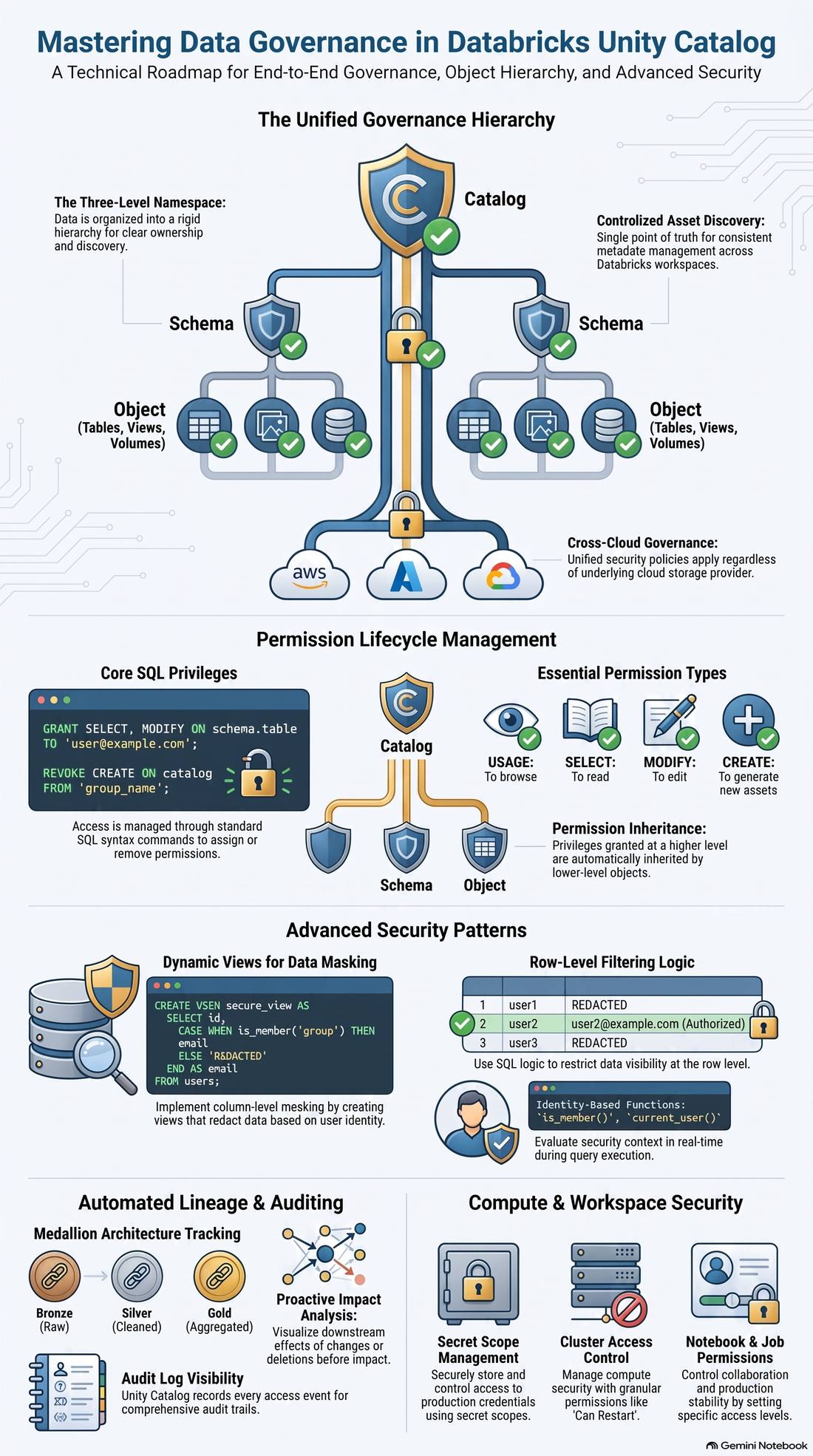
Fig. 9.1 — Catalog/Schema/Object hierarchy across AWS/Azure/GCP, permission inheritance, and Medallion-architecture lineage tracking.
The unified governance hierarchy
Data is organized into a rigid Catalog → Schema → Object namespace for clear ownership and discovery. Cross-cloud governance means the same security policies apply regardless of the underlying cloud storage provider (AWS, Azure, GCP).
Permission inheritance
Privileges granted at a higher level (Catalog) are automatically inherited by lower-level objects (Schema, then Object) — reducing the need for repetitive per-table grants.
Automated lineage & auditing
Unity Catalog tracks Bronze → Silver → Gold lineage automatically, enabling proactive impact analysis — visualizing downstream effects of a change or deletion before it happens. Every access event is recorded for comprehensive audit trails.
Compute & workspace security
Secret Scope ManagementCluster Access Control (ACLs)Notebook & Job Permissions
Exam tip
A user needing to attach a notebook to an existing cluster and run cells requires "Can Restart" permission — not "Can Manage" (too broad) or "Can Read" (insufficient to execute).
Practice Questions — Module Quiz
Click an option to reveal whether it's correct.
Module 10Data Sharing and Federation5%+
The smallest domain by weight, but tests genuinely advanced interoperability concepts — sharing data without copying it, and querying external systems in place.
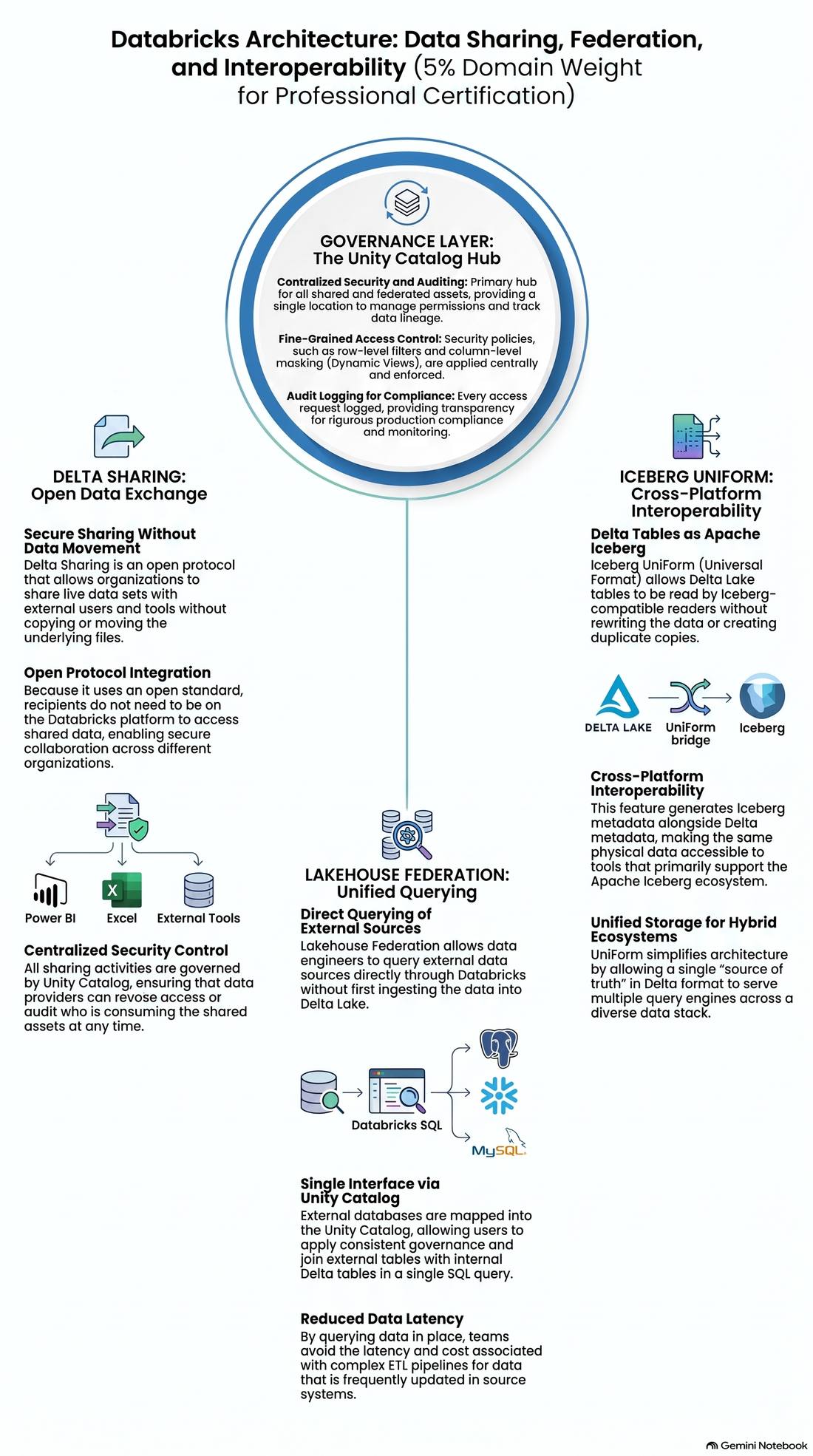
Fig. 10.1 — Unity Catalog as the governance hub for Delta Sharing, Lakehouse Federation, and Iceberg UniForm cross-platform interoperability.
Delta Sharing — open data exchange
An open protocol allowing organizations to share live datasets with external users and tools without copying or moving the underlying files. Because it's an open standard, recipients don't need to be on the Databricks platform at all — enabling secure cross-organization collaboration (Power BI, Excel, external tools).
Lakehouse Federation — unified querying
Query external data sources (PostgreSQL, Snowflake, MySQL) directly through Databricks SQL without first ingesting the data into Delta Lake. External databases are mapped into Unity Catalog, so consistent governance applies and external tables can be joined with internal Delta tables in a single SQL query — reducing latency and avoiding costly ETL for frequently-updated source systems.
Iceberg UniForm — cross-platform interoperability
Allows Delta Lake tables to be read by Apache Iceberg–compatible readers without rewriting the data or creating duplicate copies. UniForm generates Iceberg metadata alongside Delta metadata, so the same physical data serves both ecosystems — a single Delta-format "source of truth" for hybrid, multi-engine stacks.
Exam tip
If a scenario says "external tool needs live access without copying data and isn't on Databricks," the answer is Delta Sharing. If it says "query an external database in place, joined with Delta tables," the answer is Lakehouse Federation.
Practice Questions — Module Quiz
Click an option to reveal whether it's correct.
Spaced Practice · 71 Cards
Flashcards — Developing Robust Code Domain
A rapid-recall deck covering the highest-weighted domain (22%) plus cross-cutting concepts that show up throughout the exam — Liquid Clustering, Multiplex Bronze, watermarking, checkpoints, CDC, ACLs, and more. Read the question, think of your answer, then flip the card to check yourself. Mark each card "Got It" or "Still Learning" to build a focused review queue as you go.
Card 1 / 71
Question
Loading…
Click to flip ↻
Answer
Click to flip ↻
No cards in this view yet — mark some cards as "Still Learning" or "Got It" first, or switch back to All.
Academic & Technical Bibliography
References & Further Reading
Compiled from the Databricks Certified Data Engineer Professional exam blueprint and supporting technical guides, study notes, and flashcard sets.
01
Databricks Certified Data Engineer Professional — Exam BlueprintFull domain-weight breakdown (10 domains), core technology focus, and assessment logistics (59 questions, 120 minutes).
02
Ingestion & Acquisition Mastery — Technical ReferenceAuto Loader vs. COPY INTO selection strategy, the Multiplex Bronze streaming pattern, schema evolution and late-data handling.
03
Data Transformation, Cleansing, and Quality GuideMedallion flow, Warn/Drop/Fail expectation policies, the quarantine pipeline pattern, batch and streaming deduplication.
04
Advanced Data Modeling for Databricks ProfessionalsSCD Type 1/2 with APPLY CHANGES INTO, the Multiplex design pattern, data integrity and relationship modeling in the Lakehouse.
05
Mastering Robust Code Development — the 22% Domain GuideBronze/Silver/Gold layer implementation detail, Streaming Tables vs. Materialized Views, Liquid Clustering and transaction-log statistics.
06
Debugging and Deploying CI/CD — Mastering the Professional DomainDatabricks Asset Bundles structure, REST API 2.0 idempotency, multi-task troubleshooting and Repair & Rerun.
07
Monitoring, Alerting & Observability — The Data Engineer's Control CenterSpark UI / Ganglia UI diagnostics, SLA/SLO design, alerting logic, MLflow and Unity Catalog lineage forensics.
08
Cost & Performance Optimization PlaybookServerless vs. job clusters, Liquid Clustering vs. legacy Z-Ordering, Predictive Optimization, data skipping and Delta caching.
09
Data Security & Compliance — Databricks Certified Professional Exam Guide3-level namespace, dynamic view masking, row-level security, secrets management, cluster/workspace governance.
10
Mastering Data Governance in Unity CatalogUnified governance hierarchy, permission lifecycle and inheritance, automated lineage and audit logging.
11
Data Sharing, Federation, and Interoperability ReferenceDelta Sharing, Lakehouse Federation, and Iceberg UniForm cross-platform interoperability patterns.
12
Professional-Grade Flashcard Bank (70 cards)Spans all ten domains — SCD, watermarking, checkpoints, Predictive Optimization, ABAC, CDF, join strategies, and more.
13
Practice Question Banks (6 domain quizzes, 60 questions total)Retired-style multiple-choice questions with answer keys and hints, used to build the quiz below.
Lesson Assessment · Qualify for Certificate
Practice Quiz — Databricks Data Engineer Professional
Ten questions drawn from the module content above, spanning six of the ten domains. Answer all correctly to unlock your certificate — retry as many times as you like.
You have studied:
Multiplex ingestion, SCD Type 2 with APPLY CHANGES INTO, Liquid Clustering
CI/CD with Databricks Asset Bundles and REST API idempotency
SLA-driven monitoring, dynamic-view security, and governance fundamentals
Your Score
0/10
Certificate of Completion
Print Your Certificate
Score 10/10 on the quiz above to generate your personalized certificate below.
WDF Universe · World Development Foundation
New Delhi, India · wdfuniverse.org proudly presents this
Certificate of Course Completion
This is to certify that
— your name —
has successfully completed
Subject: Advanced Production Data Engineering with Databricks Course Module DEP‑2026: Databricks Certified Data Engineer Professional
Topic: Advanced Pipelines, Optimization, CI/CD, Monitoring, Security & Governance
Quiz Score: — / 10
Course content compiled from the official Databricks Certified Data Engineer Professional exam blueprint (2026) Hosted by World Development Foundation (WDF) for the Global Community
Prof. Dr. Sir Hari Om SrivastavaKStJ · D.Litt · Ph.D · Scientist President & CEO, World Development Foundation
Aprajita SrivastavaHony. Director, World Development Foundation, New Delhi
Course Code: DEP‑2026‑MC001
Date of Issue: —
Quick Reference
Frequently Asked Questions
Do I need the Associate certification first?
Not required by Databricks, but strongly recommended — this course assumes fluency with Auto Loader, basic Medallion architecture, Unity Catalog fundamentals, and Lakeflow Jobs, and builds directly on top of them.
Which domain should I study first?
Developing Robust Data Processing Code (22%) and Cost & Performance Optimization (13%) together account for over a third of the exam — start there, then move to the four 10%-weighted domains (Monitoring, Security, CI/CD, Transformation).
What's the single most-repeated "gotcha" across question banks?
Multi-task job status logic — when parallel tasks have mixed outcomes (some succeed, some fail), the terminal status is "Partially Completed," not "Failed." This pattern shows up across the CI/CD, Monitoring, and general question banks.
Is Hive Metastore still tested?
No. Unity Catalog is the mandatory governance environment for every exam scenario; legacy Hive Metastore concepts are not assessed at either the Associate or Professional level.
Is this course affiliated with Databricks?
No — this is an independent, free study course compiled from publicly available exam blueprint material and supporting study notes, for exam preparation purposes only.